Updated on
What to wear in Morocco as a woman
What should you wear in Morocco as a woman? Advice per situation (medina, desert, beach, hammam) and per season. You don't need a headscarf.
In short
- Shoulders and knees covered is the basic rule; you don't have to wear a headscarf.
- Light, loose fabrics are more comfortable than tight and short clothes, even in the heat.
- In Essaouira and other beach towns a bikini is normal on the beach, but not in town.
- For the desert and the Atlas, bring layers: days are warm and nights are cold.
- A large scarf is the most useful item in your suitcase.
In Morocco, cover your shoulders and knees; that is all you need to do. There is no dress code for tourists and you don't have to wear a headscarf. Covered clothing is seen as respectful, though, and it gets you less attention on the street. The rules are simpler than you might expect when you start packing.
The basic rule
Shoulders and knees covered. Long sleeves, a headscarf or dark colors are not necessary. Loose, airy clothing is also more comfortable in the heat than anything tight and short. Think of:
- Wide linen or cotton pants
- Long skirts or dresses that fall below the knee
- Blouses or short-sleeved T-shirts
- A large scarf you can use for everything: over your shoulders, on your head against the sun, against the dust in the desert
Spaghetti straps, hot pants, low necklines and see-through fabrics are better left at home. They are not forbidden, but in the medina they attract a lot of attention you don't need.
Per situation
Medina and souks
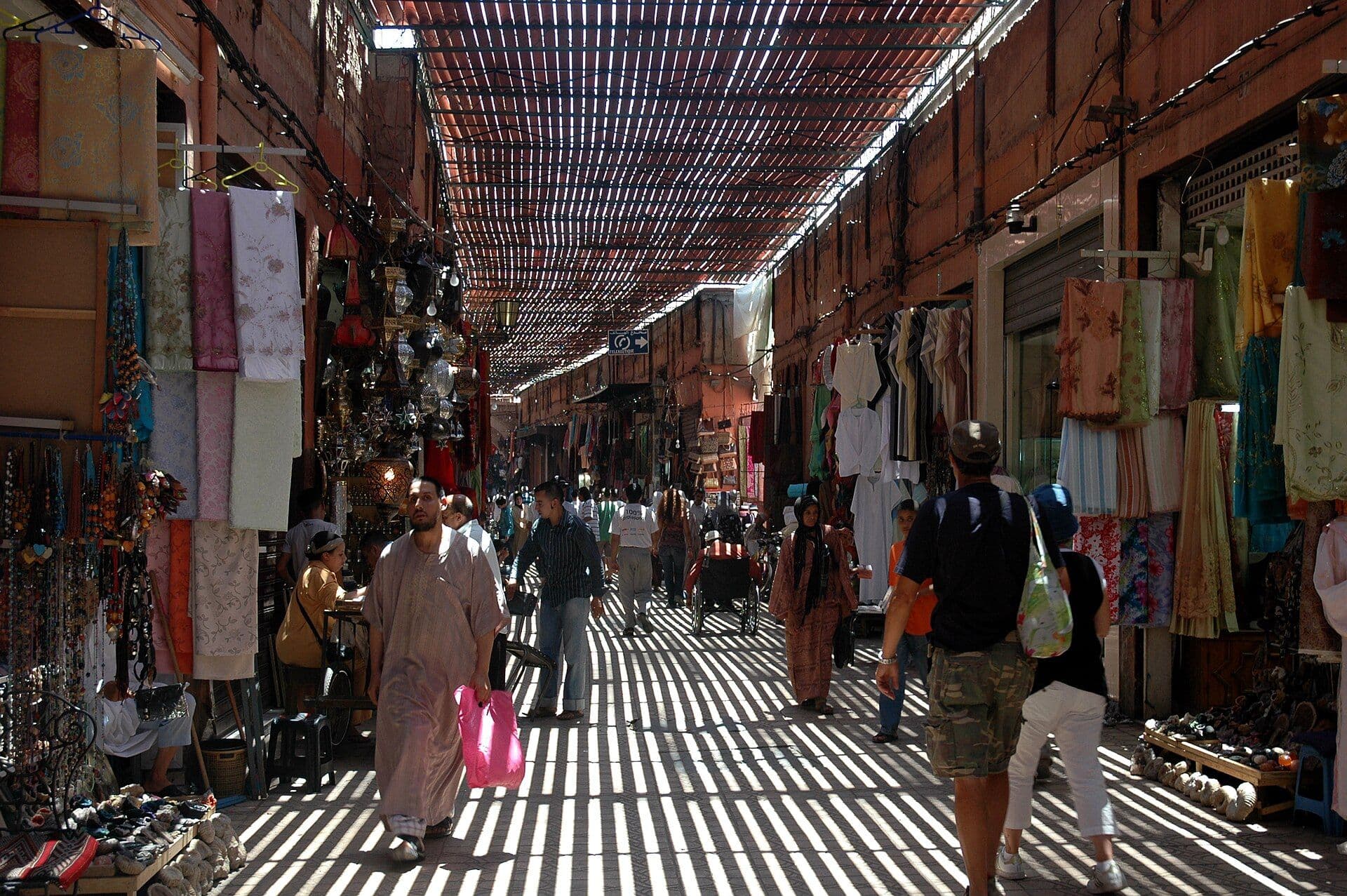
This is where you are among Moroccans the most, and where you dress the most covered. Keep knees and shoulders covered and wear comfortable closed shoes or sandals with a good sole, because the alleys are uneven and sometimes wet. A small bag you carry in front of you works better than a backpack. This is also what you wear on the souks and crafts tour.
New town, Gueliz and restaurants
In Gueliz, the modern part of Marrakesh, you see Moroccan women in jeans, dresses and heels. You can dress a little more freely here than in the medina, especially in restaurants in the evening. A sleeveless dress with a cardigan or scarf is fine.
Beach and pool
On the beach in Essaouira, in Agadir and at hotel and riad pools, a bikini is normal. The unwritten rule is that you put something on as soon as you leave the beach or the pool. A long beach dress or tunic is enough.
Desert
In the Sahara and in the Agafay desert, wear light, long clothing during the day against sun and sand: long pants, a light long-sleeved blouse, a scarf around your head and sunglasses. As soon as the sun goes down, it gets cold. Bring a fleece or warm sweater and a thin jacket, and in winter a warm hat as well. On a desert trip to Merzouga you usually get blankets, but an extra layer of your own always comes in handy.
Atlas Mountains
For hiking in the Atlas Mountains you need sturdy shoes, long pants and layers. In Imlil the morning can be chilly while it is already warm down in Marrakesh. The villages are conservative communities, so dress covered there. People appreciate it and welcome you more easily.
Hammam
In a public women's hammam you wear only underwear bottoms. Nobody blinks at bare breasts, but a bikini top will get looks. In tourist spa hammams you get disposable underwear and a towel. Bring flip-flops, a clean set of clothes and a comb. You can bring black soap and a kessa glove yourself or buy them on the spot.
Mosques and religious sites
Most mosques in Morocco are not open to non-Muslims. The exception is the Hassan II Mosque in Casablanca, which you can enter on a guided tour. There you cover your arms and legs and bring a scarf for your head. A madrasa (Koranic school) such as the Ben Youssef in Marrakesh is open and doesn't require special clothing; covered is enough.
Per season
- Spring and fall (March to May, September to November): the easiest. Summer clothes during the day, a cardigan or thin jacket in the evening.
- Summer (June to August): Marrakesh regularly reaches 38 to 45 °C (100 to 113 °F). Wear the lightest things you have, in light colors and natural fabrics, and bring a hat or scarf against the sun. The coast is a lot cooler.
- Winter (December to February): days are pleasant, 15 to 20 °C (59 to 68 °F), and evenings are cold. Riads are poorly insulated, so bring a warm sweater and thick socks. In the desert and the mountains, nights can be around freezing.
The weather per month is in the guide on the best time to visit.
Shoes
Two pairs are enough: closed shoes or sneakers you can walk in for hours, and sandals or flip-flops for the beach, the hammam and the riad. Leave heels at home; the alleys of the medina were not built for them.
What you can buy here
If you forget something, you can buy it in Morocco. A djellaba (a long hooded robe) or a kaftan is comfortable, beautiful and not expensive. Scarves cost a few euros in any souk. Soukayna knows where to find quality and what a fair price is, so ask her along the way.
Keep the packing list next to you to check that you have everything.
Frequently asked questions
Do I have to wear a headscarf in Morocco?
No. Many Moroccan women don't wear one and nobody expects it from tourists. A scarf is useful against sun and dust, and at religious sites that are open to visitors.
Can I wear shorts?
You can, but you will stand out and get more comments. Wide pants or a skirt that falls below the knee is just as cool and attracts less attention.
What do I wear in the hammam?
In a public hammam women wear only underwear bottoms. In tourist spa hammams you get disposable underwear. Bring a clean set of clothes for afterward.
Can I wear a bikini on the beach?
Yes, on the beaches of Essaouira and Agadir and at hotel pools. Put something on over your bikini as soon as you leave the beach.
Rather have someone arrange it for you?
When you travel with Soukayna, she takes care of the driving, the stops and the local guides. Ask for a proposal in the chat.
You chat with Soukayna (English, French, Moroccan Arabic) or Bas (Dutch).