Updated on
Money and payments in Morocco
How money works in Morocco: the dirham, ATMs, exchanging cash, tipping and haggling in the souks. With typical prices, so you know what is normal.
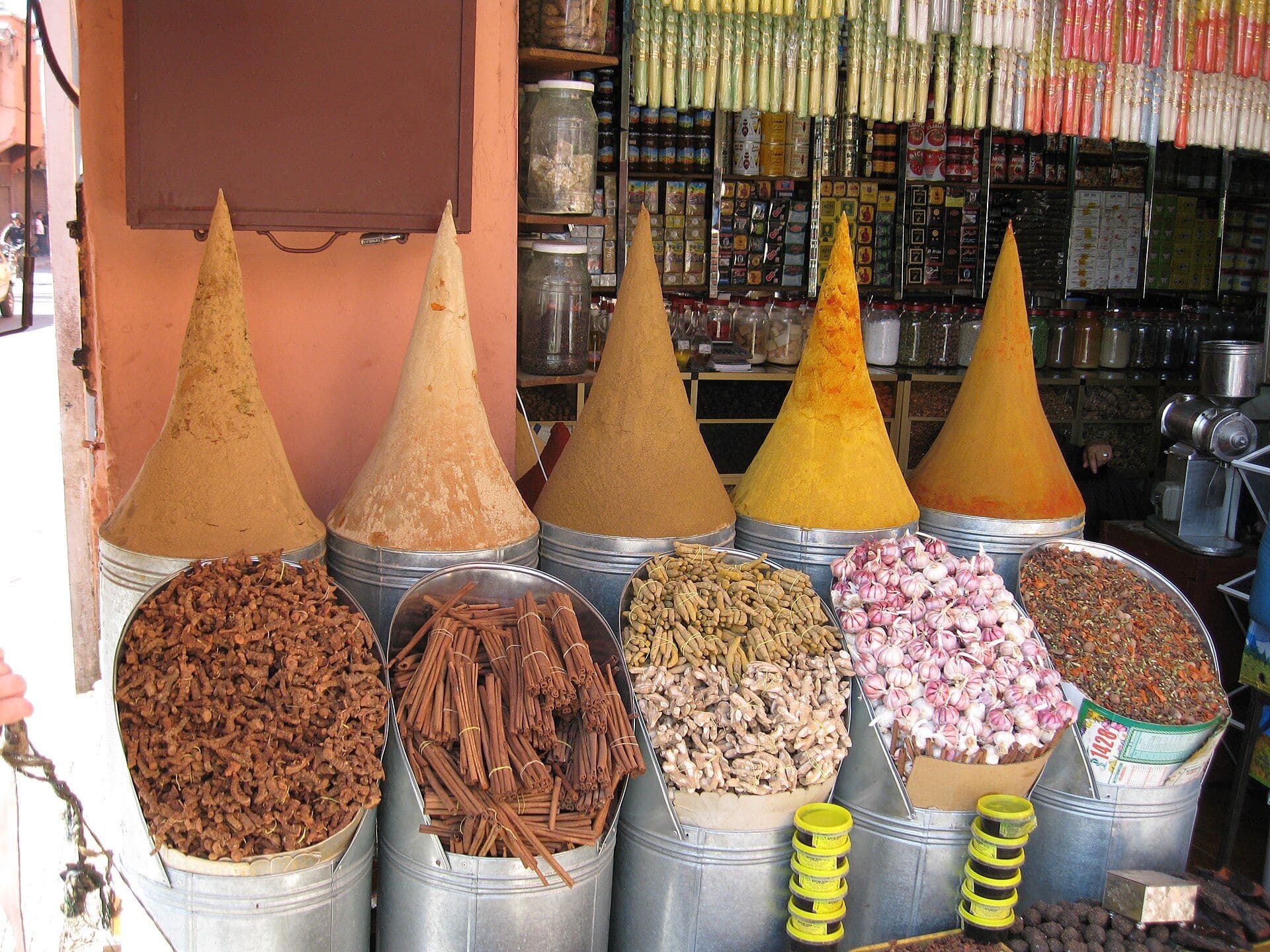
In short
- The currency is the dirham (MAD); 1 euro is about 10.5 dirham, so check the current rate.
- In the medina, at markets and in taxis you pay cash.
- You can withdraw cash at ATMs in every city; bring some euros as a backup too.
- Tipping is normal: around 10 percent in restaurants, small amounts for help.
- You haggle in the souks, not in fixed-price shops or supermarkets.
In Morocco you pay in dirhams, and in cash far more often than at home. ATMs are almost everywhere in the cities. In the souks, haggling is completely normal. None of it is complicated, but it works differently from what you are used to.
The dirham
The Moroccan currency is the dirham, abbreviated MAD or dh. One euro is about 10.5 dirham; check the current rate before you leave. The dirham is a closed currency: officially you can't buy or sell it outside Morocco. So don't exchange too much, and spend your last dirhams at the airport or change them back there.
There are bills of 20, 50, 100 and 200 dirham and coins of 1, 2, 5 and 10. Make sure you carry small bills and coins, because a taxi driver or a tea house often can't give change for a 200.
Cash or card
Cash is the norm in the medina, at markets, in petit taxis, in small eateries and with most craftspeople. You can pay by card in hotels, larger restaurants, supermarkets, gas stations and shops in the new town. Expect to need more cash per day than you do at home.
You withdraw money at bank ATMs. Every city has plenty of them.
- Use ATMs in or next to a bank branch, not stand-alone machines in the souk.
- Don't withdraw too much at once, but keep in mind that your own bank charges a fixed fee per withdrawal.
- Check before you leave that your card is enabled for use in Morocco. Some banks block payments abroad by default until you switch them on in the app.
- A credit card is handy as a backup and sometimes required by hotels.
It is wise to bring some euros as an emergency reserve. You can exchange them at exchange offices, banks and the airport, at rates that usually differ very little. Don't exchange money on the street.
What things cost, roughly
Prices vary by place and by season. These amounts give you an idea:
- Mint tea on a terrace: about 10 to 20 dirham
- Tagine in a local eatery: about 50 to 90 dirham
- Dinner in a good restaurant: about 200 to 400 dirham per person
- Petit taxi within Marrakesh: about 20 to 40 dirham during the day, a little more in the evening
- Entrance to the Bahia Palace or the Ben Youssef madrasa: about 70 to 100 dirham
- Public hammam: about 20 to 50 dirham, more with a scrub
- 1.5-liter bottle of water: about 5 to 10 dirham
If something in the medina costs far more than this, you are probably paying the tourist price. Ask Soukayna along the way what is normal; she knows it by heart.
Tipping
Tipping is very common in Morocco. It is not mandatory, but it is the custom, and for many people it is an important part of their income.
- Restaurant: around 10 percent, or round up for small amounts.
- Café: leave a few dirham on the table.
- Porter, someone who carries your bag in the medina: 10 to 20 dirham.
- Guide for half a day: 50 to 100 dirham, depending on the group.
- Hammam: 20 to 50 dirham for the person who scrubbed you.
- Someone who "spontaneously" shows you the way: nothing, unless you asked for it yourself. Then 10 dirham.
On a multi-day trip with a driver, a tip at the end is customary. How much you give is up to you.
Haggling in the souks
In the souks of Marrakesh and Fes almost nothing has a price tag. Haggling is part of it. Vendors see it as a sport and don't take it as an insult. This is how to go about it:
- Decide beforehand what you are willing to pay at most.
- Don't show too clearly which item you really want.
- Ask the price, offer well under half and work toward each other in small steps.
- Stay friendly and turn it into a conversation. You can accept tea; it doesn't commit you to anything.
- If you can't agree, walk away. You will often be called back with a better price.
Would you rather not negotiate? At the Ensemble Artisanal in Marrakesh and in cooperatives, such as the argan oil cooperatives on the way to Essaouira, prices are fixed. On the souks and crafts tour Soukayna makes sure you pay a fair price.
You don't haggle in supermarkets, pharmacies, restaurants and shops with price tags. The same goes for entrance fees.
Paying for your trip with us
The price of a trip or day tour is available on request. It depends on the route, the number of days, the group size and the season. We discuss how payment works beforehand through the chat, so you know where you stand.
Being smart with money
- Split your money: part in your bag, part in the safe at your riad.
- Keep small change separate for tips and taxis.
- Keep receipts of large purchases for customs and your insurance.
- Read the guide on travel documents and insurance to see what to do if you lose your card.
Frequently asked questions
Can I pay by card everywhere in Morocco?
No, not everywhere. Hotels, larger restaurants and shops in the new town usually take cards. In the medina, at market stalls, in taxis and in small eateries you pay cash.
Can I bring euros and exchange them there?
Yes, there are exchange offices in every city and at the airport, and the rate is usually reasonable. Using an ATM is often more practical. Do check what your own bank charges.
How much should I tip?
Around 10 percent in a restaurant. A porter, guide or someone who helps you gets 10 to 20 dirham. After a multi-day trip you give your driver what feels right to you; it is appreciated, but not expected.
How far do I haggle in the souk?
A vendor often starts at two to three times the price he ends up at. Offer half or less, stay friendly and walk away if you can't agree. That works better than hard bargaining.
Rather have someone arrange it for you?
When you travel with Soukayna, she takes care of the driving, the stops and the local guides. Ask for a proposal in the chat.
You chat with Soukayna (English, French, Moroccan Arabic) or Bas (Dutch).