North, imperial cities
Fes
Fes, Morocco's oldest imperial city: the car-free medina of Fes el-Bali, the tanneries and the madrasas, and how to get through it as a woman without hassle.
- Region
- North, imperial cities
- From Marrakesh
- About 6 hours by car from Marrakesh, or about 7 hours by train
- Best time
- April through June and September through November; cold and wet in winter, hot in summer
Do not miss
- Fes el-Bali, one of the largest car-free urban areas in the world
- The Chouara tannery from a terrace
- The Bou Inania and Al-Attarine madrasas
- The view over the city from the Marinid Tombs
- Crafts that are still made here for real: copper, ceramics, embroidery
- A riad in the medina to recover from the crowds
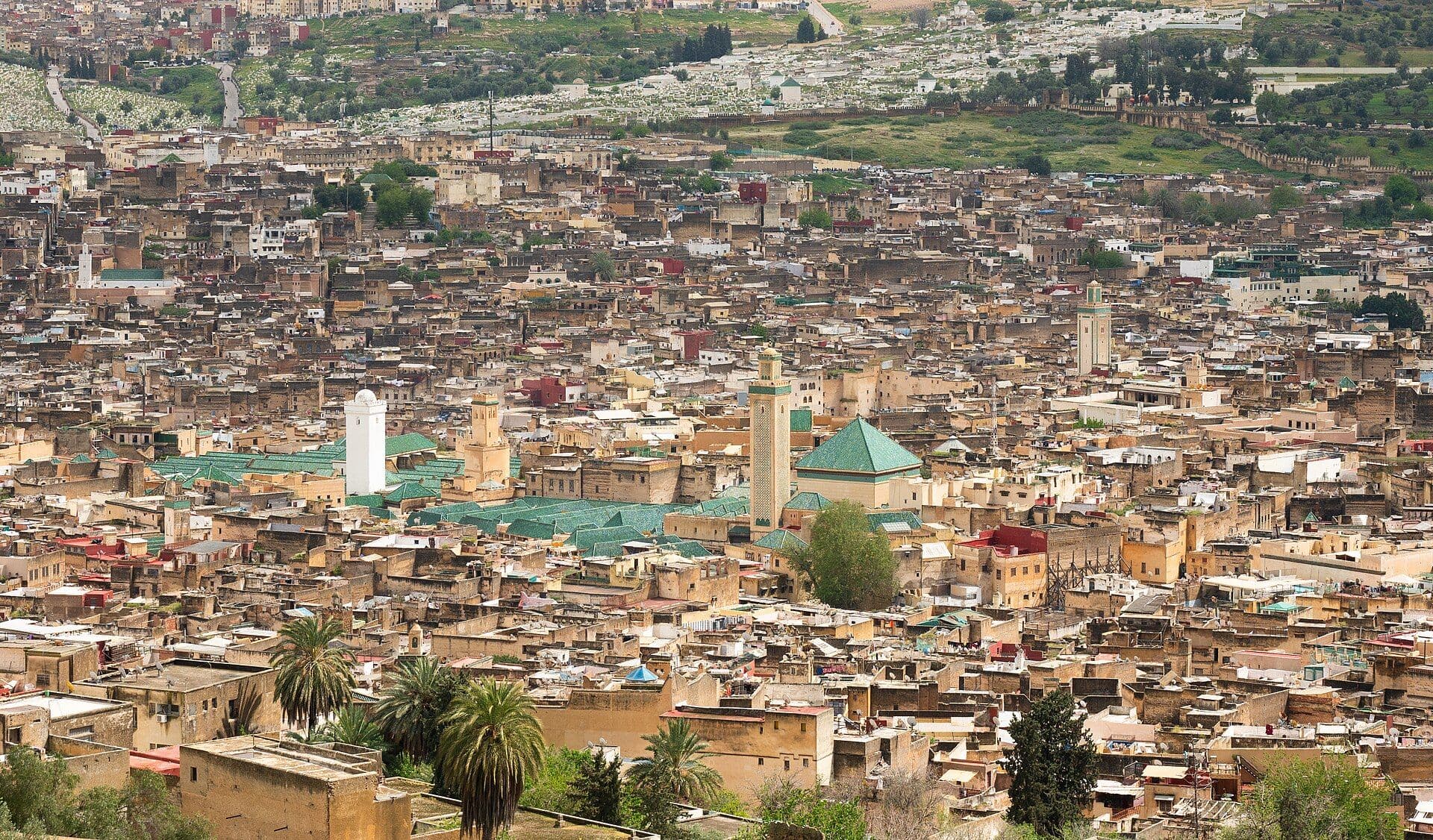
Fes takes more effort than Marrakesh. The medina, Fes el-Bali, is one of the largest car-free urban areas in the world: thousands of alleys, donkeys carrying loads, workshops where copper is hammered and leather is dyed the way it was a thousand years ago. It is busier, steeper and more confusing than Marrakesh. It is also more real, because people still work in the medina, and selling is only part of what goes on. With a good guide and a riad to retreat to, Fes will leave you with one of the strongest memories of your trip.
Tanneries, madrasas and workshops
You know the Chouara tanneries from the photos: dozens of stone vats of dye, men standing up to their waists in the color. You watch from the terrace of a leather shop. You get a sprig of mint against the smell and a sales pitch thrown in. Five minutes of looking is enough to get your photo.
The madrasas are where you catch your breath. The 14th-century Bou Inania and the Al-Attarine by the spice market have courtyards with zellige, cedar wood and carved plaster where you can sit for a while. The Kairaouine University, one of the oldest in the world, is closed to non-Muslims. Through the doors you catch a glimpse of the courtyard.
From there you walk past the Nejjarine fountain and the woodworking museum next to it, Place Seffarine where the coppersmiths work, and the many funduqs. Those are old caravanserais that now house craftspeople. At the end of the day you drive up to the Marinid Tombs on the hill, for the view over the whole medina at sunset.
Fes el-Jdid, the newer city from the 13th century, has the Mellah (the Jewish quarter) and the royal palace with its brass doors. An hour is enough.
What to skip
The pottery on the edge of town is a sales outlet with a demonstration, and only worth it if you want to buy ceramics anyway. The same goes for the carpet shops where you stop "just" for tea: count on an hour and a firm sales talk. Say in advance what you want, and the guide will leave them out.
Out on your own in Fes
Fes is more conservative than Marrakesh and the attention is different: less flirting, more "where are you going, I'll take you there." Self-appointed guides, often boys, walk along with you until you say yes. A firm no and walking on does the job. With an official guide next to you it stops completely. Apart from that, women on their own are left alone; the medina is full of women doing their shopping.
Dress properly covered in Fes: long pants or a skirt, covered shoulders, nothing tight. You stand out here faster than in Marrakesh. The guides on what to wear and on language and etiquette help you with that.
In the evening the medina quickly turns empty and dark. Eat at your riad or have someone walk you back. Riads in Fes are often especially beautiful, with courtyards four stories high, and that is the nicest place to end the day.
How to get there and how long to stay
From Marrakesh it is about a six-hour drive via Beni Mellal, or seven hours by train via Casablanca. From Meknes it is an hour. Stay two nights. That gives you one full day with a guide, half a day to yourself and time to recover.
Go between April and June or between September and November. In winter it is cold and wet, in summer stifling in the narrow alleys. In the city you do everything on foot. A petit taxi takes you from the medina to the new town; how those work is in getting around.
Fes on the tour
Fes is a fixed part of the imperial cities tour. Soukayna drives you there, via Beni Mellal and the Middle Atlas or via the coast and Rabat, and arranges an official local guide in Fes who knows the medina. She stays available herself for the drives to Chefchaouen and Volubilis. If you want to combine Fes with the Sahara, you drive from Merzouga to Fes in seven hours and you have made a full loop of Morocco.
Questions about Fes
Do I need a guide in Fes?
For the first day we strongly recommend it. The medina of Fes has thousands of alleys, no logical layout and many dead ends. With a guide you see in one day what would otherwise take you three days of searching. The second day you can easily manage on your own.
How bad does the tannery smell?
The smell is sharp; at the entrance to the terrace you are handed a sprig of mint. In summer the smell is stronger. The view of the dye vats makes up for it, and five minutes is enough.
Is Fes more tiring than Marrakesh?
Yes. The medina is bigger, steeper and busier, and there are more people who want to sell you something or take you somewhere. Plan half a day of rest and choose a riad with a rooftop terrace.
Can I get to Chefchaouen from Fes?
Yes, it is about a three and a half hour drive. You can do Chefchaouen from Fes as a day trip or with an overnight stay.
Trips to Fes
Other destinations
Shall we plan your trip together?
Send a message with when you want to go, who you are traveling with and what appeals to you. You get a proposal back and you are not committed to anything.
You chat with Soukayna (English, French, Moroccan Arabic) or Bas (Dutch).